Standards guide · Flanges
Flange standards explained: EN 1092-1, DN, PN, types and sealing faces
Two figures define every flange: the nominal size DN and the nominal pressure PN. On their own, though, they don't fully specify it – a complete order also needs the standard, flange type, sealing face, material, pipe connection or bore, and the required certificate. This page places both figures in context, shows how old DIN numbers translate into today's EN 1092-1 type numbers, and clears up the most common source of error with flanges: confusing sealing face forms.
- Standard
- EN 1092-1
- Replaces
- DIN 2501 and others
- Scope
- PN 2.5 – PN 400
- Nominal sizes
- DN 10 – DN 4000
- Does not cover
- ANSI / ASME
Note: not every combination of flange type, nominal size and pressure rating is covered by the standard – the type-specific dimension tables of the applicable standard edition always govern.
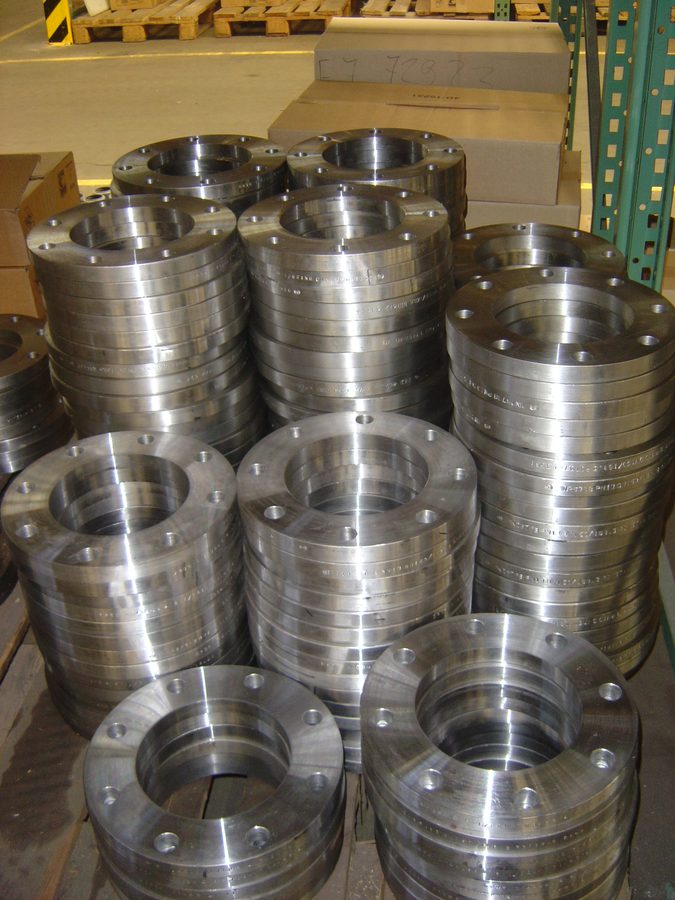
DN and PN: the two key figures of a flange
Figure
DN – nominal size
DN (Diameter Nominal) is a dimensionless size designator for components in a piping system, defined in EN ISO 6708. It relates indirectly to the bore or the outside diameter of the connections in millimetres – without itself being an exact dimension.
DN 80 corresponds, for example, to a pipe connection with an outside diameter of around 88.9 mm.
Figure
PN – nominal pressure
PN (Pressure Nominal) is an alphanumeric reference designator to EN 1333 that combines the mechanical and dimensional properties of a component. It relates indirectly to the permissible design pressure in bar, referenced to 20 °C.
PN 16 is not a fixed pressure figure but a reference class for design pressure and construction.

From old DIN number to type number
EN 1092-1 replaced the formerly fragmented individual standards with a unified type numbering system. Connection dimensions were largely carried over, so flanges to the new and old standards match dimensionally in common sizes. There is nevertheless no blanket interchangeability – DN, PN, flange type, sealing face, bolt-hole pattern and the specific standard edition decide case by case.
| Type no. | Designation | Old DIN no. |
|---|---|---|
| 01 | Plate flange for welding (slip-on) | 2573, 2576 |
| 02 | Loose flange (standard: loose plate flange) for weld-on plate collars / lapped pipe ends | 2641, 2642, 2655, 2656 |
| 32 | Weld-on plate collar – combined with the loose flange type 02 | – |
| 04 | Loose flanges with welding neck collar | 2673 |
| 34 | Welding neck collar – combined with the loose flange type 04 | – |
| 05 | Blind flange (standard: blank flange) | 2527 |
| 11 | Welding neck flange | 2627 – 2638 |
| 13 | Threaded flange (standard: hubbed threaded flange) | 2566 |
What the flange types look like
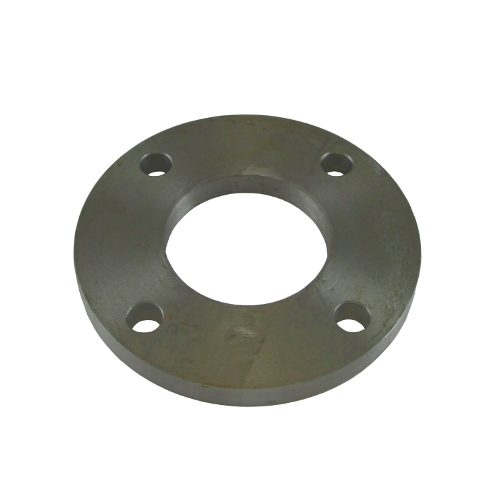
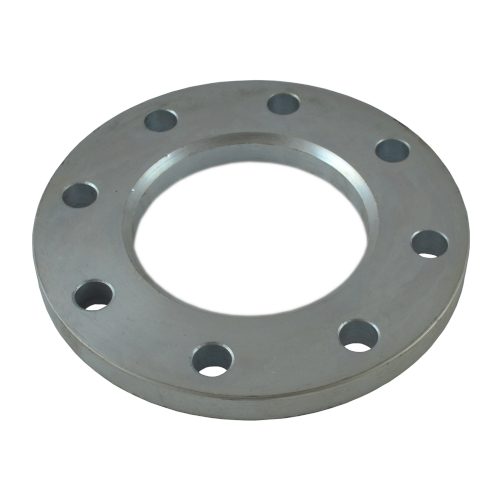
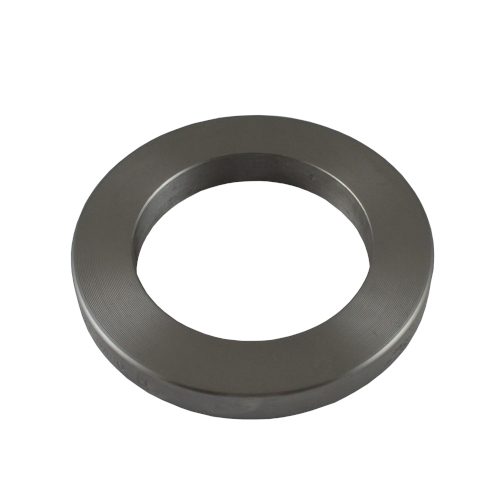
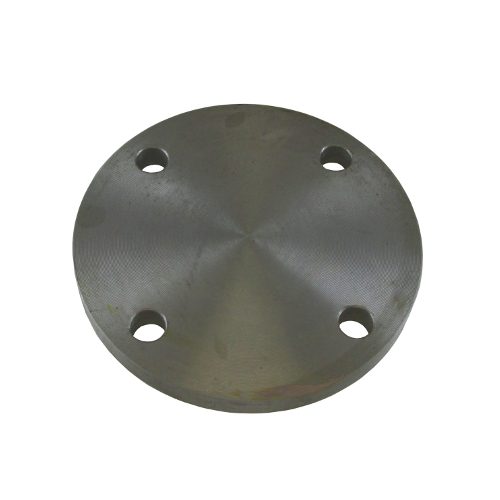
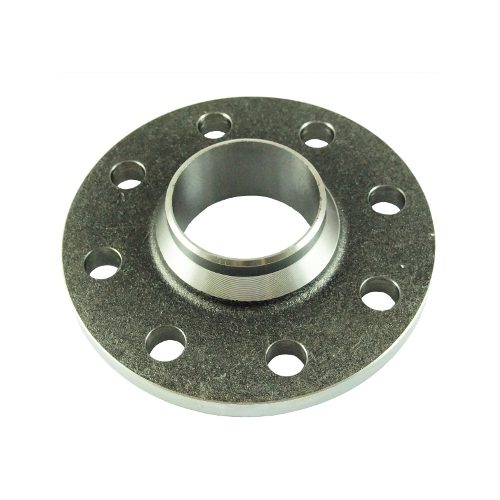
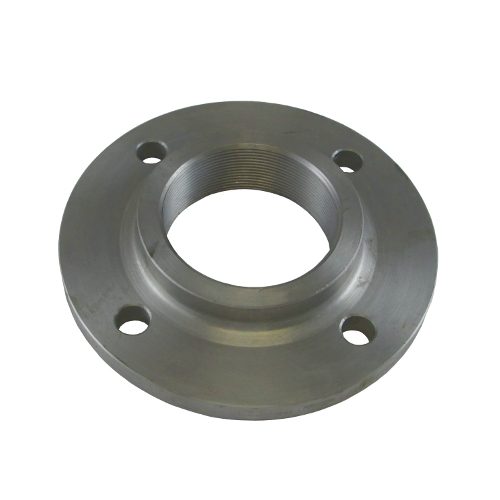
Sealing face forms: designation and risk of confusion
The sealing face forms were also renamed. The issue is not the renaming itself but that some form letters occur in both standards – meaning different things in each. Do not confuse the two: the flat sealing face (form A) is a property of the sealing surface – the plate flange (slip-on, type 01), by contrast, is a flange design.
Caution, risk of confusion: form B used to designate a flat sealing face without a raised portion. To EN 1092-1, form B instead stands for a raised face. Always state the specific standard on orders and tender documents.
| Old DIN | Design | EN 1092-1 |
|---|---|---|
| Form A | Flat face, no surface requirement | Form A |
| Form B | Flat face, turned Rz 160 | Form A |
| Form C | Raised face | Form B1 |
| Form D | Raised face, medium-fine turned | Form B1 |
| Form E | Raised face, fine turned | Form B2 |
| Form F | Tongue | Form C |
| Form N | Groove | Form D |
| Form V13 | Spigot (male face) | Form E |
| Form R13 | Recess (female face) | Form F |
| Form R14 | Recess for O-ring | Form G |
| Form V14 | Spigot with O-ring groove | Form H |
The surface finish requirements do not map one to one: EN 1092-1 form A requires Rz 12.5–50.
Sealing face roughness by form
| Sealing face form | Ra min. | Ra max. | Rz min. | Rz max. |
|---|---|---|---|---|
| A, B1, E, F | 3.2 | 12.5 | 12.5 | 50.0 |
| B2, C, D, G, H | 0.8 | 3.2 | 3.2 | 12.5 |
Sealing faces to EN 1092-1 are generally finished to a finer standard than under the old DIN standard. For special applications, such as low-temperature gases, a more detailed check of the surface finish may be required.
Dimensions, gaskets and materials in detail
Frequently asked questions about flange standards
What does the nominal size DN of a flange mean?
DN is a dimensionless size designator to EN ISO 6708 that relates to the bore or the outside diameter of the connections. DN 80, for example, corresponds to a pipe connection with an outside diameter of around 88.9 mm.
Does a flange to EN 1092-1 fit an old flange to DIN 2501?
In common sizes, generally yes: connection dimensions such as outside diameter, bolt circle (also called bolt circle diameter/BCD or pitch circle diameter/PCD) and bolt-hole diameter were largely carried over when the standard was replaced. That said, this should never be assumed as a blanket rule – interchangeability has to be checked case by case against DN, PN, flange type, sealing face, bolt-hole pattern and the specific standard edition.
What does flange type 11 to EN 1092-1 mean?
Type 11 designates a welding neck flange and replaces the former DIN numbers 2627 to 2638.
Where is the risk of confusion with sealing face forms?
Some form letters exist in both standards but stand for different designs – form B, for instance, used to mean a flat sealing face, and now means a raised face. Always state the standard when ordering.
Find the right flange
Already know your DN, PN and material? Zickwolff supplies flanges to EN 1092-1 in carbon and stainless steel, in all common types and pressure ratings – from Germany, across Europe.
Send us your inquiryTechnical basis: EN 1092-1, EN ISO 6708, EN 1333; roughness parameters Ra/Rz are now specified in EN ISO 21920-2 (the earlier EN ISO 4287 has been withdrawn). All information without guarantee – the current standard texts and the manufacturers’ technical data sheets always prevail.